- 10,000 fully AI-generated tracks arrived daily at launch.
- 2 patents were filed to protect Deezer’s detection technology.
- 10% of daily deliveries were fully AI-generated in January 2025.
What did Deezer’s AI music detection tool reveal?
Paris, January 24, 2025 – Deezer, the global music experiences platform, has deployed an AI music detection tool that identified approximately 10,000 fully AI-generated tracks delivered to the platform each day. These tracks represented around 10% of Deezer’s daily content delivery in January 2025.
The technology had been in development for approximately one year. Deezer designed the tool to detect fully AI-generated music across multiple generative models and to identify synthetic content without relying exclusively on large, model-specific training datasets.
The company also filed two patent applications in December 2024. The applications cover different methods for identifying the signatures that distinguish synthetic audio from authentic recordings.
Why is Deezer developing an AI music detection tool?
“As artificial intelligence continues to increasingly disrupt the music ecosystem, with a growing amount of AI content flooding streaming platforms like Deezer, we are proud to have developed a cutting-edge tool that will increase transparency for creators and fans alike,” said Alexis Lanternier, CEO, Deezer. “Generative AI has the potential to positively impact music creation and consumption, but its use must be guided by responsibility and care in order to safeguard the rights and revenues of artists and songwriters. Going forward we aim to develop a tagging system for fully AI generated content, and exclude it from algorithmic and editorial recommendation.“
Deezer’s launch objective was to make fully AI-generated music visible to listeners while protecting the discovery systems that help human artists reach audiences. The planned tagging system would give users clearer information about what they were hearing and would allow Deezer to distinguish fully synthetic music from music created through a broader human process.
The detection initiative also addressed the growing volume of synthetic audio delivered to streaming platforms. AI tools make it possible to create large quantities of music quickly, increasing the risk of catalog dilution, fraudulent streams, and reduced visibility for artists who rely on organic discovery.
How does Deezer detect fully AI-generated music?
The tool detects artificially created music from generative models such as Suno and Udio. Deezer can add detection capabilities for other similar tools when relevant data examples are available.
The system identifies specific artifacts and signatures created during the generation process. These signals are generally inaudible to people but can be identified by software. Because different generative models can leave different signatures, the technology can also help identify the model used to create a track.
Deezer has also developed a more generalizable approach that does not require a separate dataset for every model. This capability is important because generative AI models evolve quickly and detection tools must adapt to new systems and new forms of synthetic audio.
“We set out to create the best AI detection tool on the market, and we have made incredible progress in just one year,” said Aurelien Herault, Chief Innovation Officer, Deezer. “Tools that are on the market today can be highly effective as long as they are trained on data sets from a specific generative AI model, but the detection rate drastically decreases as soon as the tool is subjected to a new model or new data. We have addressed this challenge and created a tool that is significantly more robust and applicable to multiple models.”
What will Deezer’s AI tagging system change?
Deezer planned to tag fully AI-generated content and remove it from algorithmic and editorial recommendations. This approach would preserve listener choice while preventing synthetic tracks from receiving the same discovery opportunities as music selected for Deezer’s recommendation systems.
The tagging system would focus on music that is 100% generated through generative AI platforms. Music that includes selected AI-assisted elements within a wider human creative process is different from fully AI-generated music and requires separate evaluation.
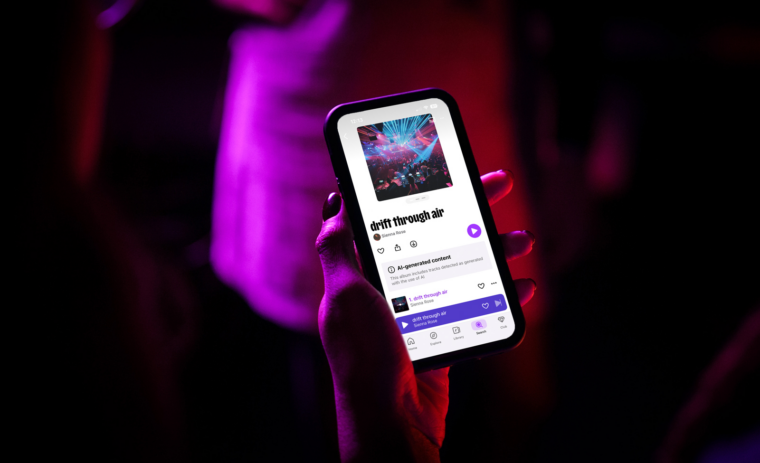
The launch also established the basis for Deezer’s later tagging system, which was introduced in June 2025. The system applies the visible label at album level to reduce the risk of false positives and to make it more difficult for bad actors to reverse engineer detection signals.
How is Deezer preparing for synthetic voices and deepfakes?
Deezer planned to extend the technology to detect deepfake voices and other forms of synthetic audio. Voice cloning creates additional risks for artists because it can imitate a performer’s identity and create recordings without the artist’s authorization.
Detection technology gives platforms a way to identify synthetic media before it affects recommendations, charts, royalty calculations, or audience trust. It also creates a foundation for clearer information about the origin of recorded music.
Why does AI detection matter to artists and creators?
Deezer’s AI detection work formed part of its broader commitment to fairness and transparency in the music ecosystem. In October 2024, Deezer became the first and only streaming platform to sign the global statement on AI training, taking a position against the unlicensed use of creative works to train generative AI systems.
The economic stakes are significant. According to a study conducted by CISAC and PMP Strategy, with participation from key industry players including Deezer, nearly 25% of creators’ revenues are at risk by 2028. The potential impact could reach €4 billion. Read the AI music study.
Deezer’s approach is based on transparency, responsible technology, and protection for artists and songwriters. The company’s detection system is designed to help listeners understand what they are hearing while reducing opportunities for synthetic content to dilute music catalogs or divert royalties.
What happened after the 2025 launch?
Deezer introduced explicit AI-music tagging in June 2025 and continued to exclude detected fully AI-generated tracks from algorithmic recommendations and editorial playlists. The company later made its detection technology commercially available to other organizations in the music ecosystem, including rights organizations, distributors, and streaming services.
Organizations interested in the technology can Explore Deezer AI detection.
***** ENDS *****
Notes to editors
Deezer’s AI music detection tool sets an industry standard, with the ability to detect 100 % AI-generated music from the most prolific generative models – such as Suno and Udio, with the possibility to add detection capabilities for practically any other similar tool as long as there’s access to relevant data examples. Not only that, Deezer has made significant progress in creating a system with increased generalizability, to detect AI generated content without a specific dataset to train on. The reported increase comes at a time of growing concerns about AI companies training their models with copyrighted material, and governments potentially diminishing copyright laws to facilitate AI development. Deezer is committed to protecting the rights of artists and creators, and remains the only streaming platform to sign the global statement on AI training.
AI is a critical challenge for the music industry – According to a study conducted by CISAC and PMP Strategy, with participation from key industry players, including Deezer, nearly 25% of creators’ revenues are at risk by 2028, which could amount to as much as €4 billion by that time. This represents a colossal, even critical, challenge for the music creation sector as a whole. Read the CISAC and PMP Strategy study.
Delivery vs streams – Most of the daily delivery of AI tracks are never streamed on Deezer, but they are diluting the catalog and are used for fraudulent activity – today, up to 70% of all streams of fully AI generated tracks are fraudulent.
Two new patents – In December 2024, Deezer applied for two patents for its AI Detection technology, focused on two different methods of detecting unique signatures that are used to distinguish synthetic content from authentic content.
FAQ
Figures updated to reflect Deezer data as of July 2026.
How many AI-generated tracks did Deezer detect at launch?
At the January 2025 launch, Deezer identified approximately 10,000 fully AI-generated tracks delivered each day, representing around 10% of daily content delivery. By July 2026, Deezer was receiving nearly 90,000 fully AI-generated tracks per day, with the share exceeding 50% of daily uploads at peak level in June 2026.
How does Deezer’s AI detection tool work?
The tool identifies specific audio artifacts and signatures associated with generative AI models. These signals are generally inaudible to listeners but can be detected by software. Deezer’s system is designed to work across multiple models and to adapt as commercial and open-source systems evolve.
Which AI models does Deezer detect?
The system detects music generated by leading commercial models including Suno, Udio, and Riffusion. Deezer can add detection capabilities for other generative models when relevant data examples are available. The company has also developed a more generalizable approach that does not require a separate model-specific training dataset in every case.
How accurate is Deezer’s AI detection system?
Deezer’s AI detection system has an accuracy rate of 99.8%. It may miss approximately two AI-generated tracks in every 1,000 and incorrectly flag fewer than one genuine human-made track in every 10,000. The visible tag is applied at album level to reduce the risk of incorrect classifications.
What is the difference between fully AI-generated and AI-assisted music?
Fully AI-generated music is created entirely through a generative AI platform, such as Suno, Udio, or Riffusion. AI-assisted music includes some AI-generated elements within a wider human creative process. Deezer’s current system focuses on fully AI-generated music and does not typically tag AI-assisted tracks.
What does Deezer’s AI tag mean for listeners?
The tag means that one or more tracks in an album were detected as fully AI-generated through a generative AI model. It does not necessarily mean that every track on the album is AI-generated. Detected tracks are excluded from Deezer’s algorithmic recommendations and editorial playlists.
Can other organizations license Deezer’s detection technology?
Yes. Since January 2026, Deezer has made its AI detection technology commercially available to organizations across the music ecosystem. The technology is available to organizations including streaming platforms, rights organizations, and distributors. Deezer has completed successful tests with industry leaders including Sacem, and Billboard uses the tool to help determine which tracks in its charts are AI-generated.
How to switch to Deezer
Transfer your music in three simple steps with Tune My Music.
- Click Transfer now to log in or create a Deezer account.
- Select your current music service.
- Transfer your entire music library, including playlists, albums, artists and tracks.
The service is free and fully secure.
Tune My Music is a trusted Deezer partner and upholds the highest data protection standards when transferring your music library. Your personal information, such as your user ID, display name and library content, remains strictly protected.
Press Contact Deezer
Jesper Wendel
jwendel@deezer.com
ABOUT DEEZER
Deezer is one of the world’s leading independent platforms dedicated to music experiences, bringing together artists and fans around a shared conviction: Live the Music.
Available in more than 180 countries, it offers an extensive music catalog, a lossless HiFi audio experience and innovative features.
Founded in Paris in 2007, Deezer has more than 600 employees worldwide and relies on strategic partnerships in the telecommunications, media, audio equipment and e-commerce sectors, creating lasting value for its partners.
A pioneer in streaming equity, Deezer was the first platform to deploy a new artist remuneration model.
Listed on Euronext Paris, ticker DEEZR and ISIN FR001400AYG6, Deezer is part of the Euronext Tech Leaders segment, dedicated to high-growth technology companies in Europe.
For the latest news, visit the Deezer newsroom.
For investor relations, visit Deezer’s dedicated space.
Follow Deezer News on X and Deezer on LinkedIn for real-time updates.
Deezer – Live the Music